
REFER & EARN Refer a friend, you both get ₹1,000 Learn more →
LIMITED OFFER Special Offers: Up to 50% Off Packages Learn more →
Calm first, correct second

Sensitive Skin Does skincare sting, weather make your face burn, or “gentle” products still cause redness? Your symptoms are real—and the cause may be a damaged barrier, irritation, allergy or another skin condition.

Dermis 365 helps simplify your routine, identify triggers and rebuild tolerance without pushing unnecessary actives or procedures.

Doctor-led skin, hair, aesthetic and wellness care · Kanakapura Road, Bangalore 560109
Sensitive Skin Clinical Assessment & Treatment - Dermis 365 Bengaluru
100% Doctor Supervised
AI Skin & Hair Analysis
3 Laser Platforms
1:1 Customised Care Plans
Two broad patterns

Sensitivity can be visible—or only felt

Burning, tingling, itching or pain is present even when the skin looks normal. This does not mean the symptoms are imagined.

Subjective sensitivity

Burning, tingling, itching or pain is present even when the skin looks normal. This does not mean the symptoms are imagined.

Objective sensitivity

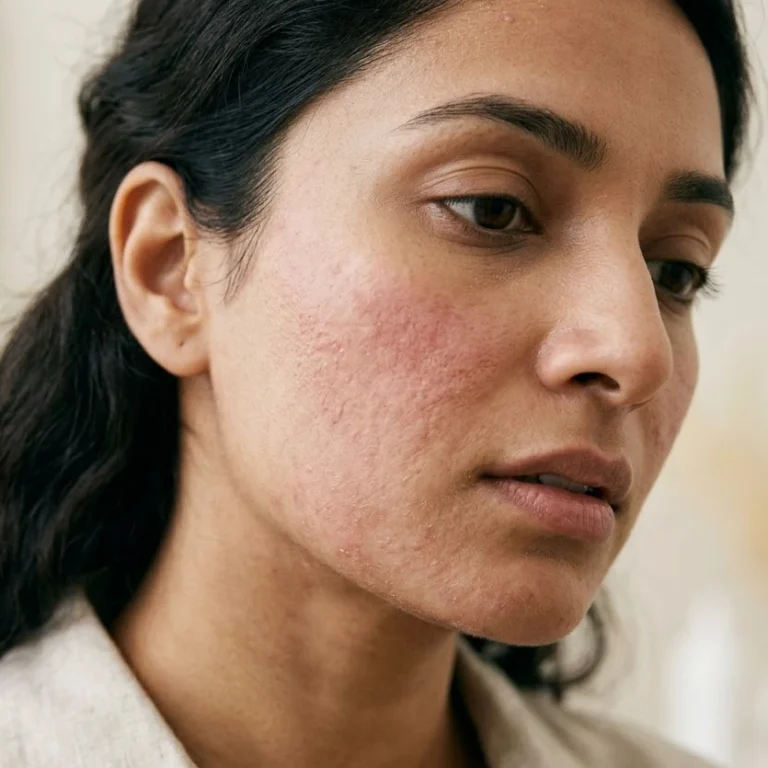
Symptoms occur with visible redness, darker colour, dryness, scaling, swelling, bumps or another sign of inflammation.

Redness or darkening

Inflammation may look red on lighter skin and violet, grey or darker on deeper tones.

Dryness, bumps or scale

Peeling, rough patches, hives or blisters suggest a stronger reaction or underlying condition.

Why it flares

Common triggers and underlying causes

  1. 1
    Over-cleansing Hot water, foaming washes, scrubs and frequent washing remove protective lipids.
  2. 2
    Too many actives Layering acids, retinoids, vitamin C, acne products and exfoliants can overwhelm the barrier.
  3. 3
    Fragrance and preservatives These may irritate directly or trigger allergic contact dermatitis in selected people.
  4. 4
    Weather and environment Heat, cold, wind, low humidity, pollution, sweat and ultraviolet exposure may provoke symptoms.
  5. 5
    Underlying skin disease Eczema, rosacea, acne, psoriasis and seborrheic dermatitis can weaken or inflame the barrier.
  6. 6
    Friction and fabrics Masks, shaving, tight clothing, wool and repeated rubbing can worsen reactive skin.

Clinical Overview & Triggers

  • Key insight Comprehensive medical evaluation helps determine the exact underlying mechanism.
Find the cause

How Dermis 365 assesses sensitive skin

We review when symptoms started, where they occur, products used, work and household exposure, weather, medicines and previous treatment.

Photographs of ingredient lists and a timeline of reactions are often more useful than buying another “sensitive skin” product.

Skin and barrier examination

Review of every cleanser, serum, cream and cosmetic

Assessment for rosacea, eczema, acne or infection

Distinguishing irritant from possible allergic dermatitis

Patch-test referral when delayed allergy is suspected

Biopsy or other testing only when the diagnosis remains unclear

Bring your products

Photographs of ingredient lists and a timeline of reactions are often more useful than buying another “sensitive skin” product.

Available after assessment

Sensitive-skin treatments at Dermis 365

The first goal is comfort and barrier recovery. Cosmetic procedures wait until active inflammation is controlled.

Routine reset

Temporarily remove likely irritants and reduce care to essential, tolerated products.

Barrier-repair skincare

Fragrance-free cleansing, moisturising and sunscreen selected for your skin.

Prescription flare control

Short-term topical anti-inflammatory or other treatment when medically indicated.

Underlying-condition treatment

Diagnosis-specific care for rosacea, eczema, seborrheic dermatitis, acne or infection.

Contact-allergy pathway

Ingredient review and patch-test referral when a delayed allergy is suspected.

Product reintroduction plan

Add one product at a time, slowly, once the barrier is stable.

Selected light treatment

Considered for a diagnosed condition when benefits outweigh sensitivity risks.

Cautious cosmetic procedures

Gentle peels, lasers or other procedures only after recovery, with conservative parameters.

“Natural,” “clean,” “dermatologist tested” and “hypoallergenic” are not guarantees. A simple routine you tolerate is usually more useful than a long ingredient blacklist.
A calmer routine

What to do during a flare

  • Pause scrubs, acids, retinoids and strong acne treatments.
  • Wash with lukewarm—not hot—water.
  • Use a bland, fragrance-free moisturiser.
  • Protect from sun, wind and friction.
  • Do not apply lemon, baking soda, toothpaste or essential oils.
  • Do not use steroid-combination creams without medical advice.
  • Restart products one by one after recovery.
  • Get urgent help Seek urgent care for breathing difficulty, facial or throat swelling, widespread blistering or peeling, fever, eye or mouth involvement, severe pain or a rapidly spreading rash—especially after a new medicine.
Clear answers

Frequently asked questions Answered Clear & Clear.

Everything you need to know about our doctor-supervised treatments, AI skin analysis, and clinic consultations.

01 What does sensitive skin mean?

Skin that burns, stings, itches, tightens or visibly reacts to common exposures.

02 Can it feel sensitive without redness?

Yes. Subjective sensitivity can cause real symptoms with no obvious visible change.

03 What damages the barrier?

Harsh cleansing, over-exfoliation, weather, sun and underlying skin disease.

04 Is sensitive skin an allergy?

Not always. Irritation and allergic contact dermatitis are different processes.

05 Can eczema or rosacea look similar?

Yes, which is why diagnosis matters before changing products repeatedly.

06 What is patch testing?

A supervised test for delayed contact allergy using allergens placed on the back.

07 Is hypoallergenic allergy-proof?

No. It is not a guarantee of tolerance.

08 How do I add a new product?

Patch a small area, introduce one item at a time and increase gradually.

09 Should I exfoliate?

Not during a flare; later use only a suitable gentle approach if needed.

10 Can I have peels or lasers?

Possibly after the skin is calm and risk has been assessed.

11 Which sunscreen should I use?

A broad-spectrum SPF 30+ formula you can tolerate and use consistently.

12 How long does recovery take?

From days for mild irritation to several weeks for significant barrier damage.

13 What does Dermis 365 offer?

Assessment, routine reset, barrier care, prescriptions, trigger review and cautious procedures.

14 When is it urgent?

With breathing difficulty, swelling, blistering, peeling, fever, eye involvement or rapid spread.
5.0 ★★★★★
Google Reviews