
REFER & EARN Refer a friend, you both get ₹1,000 Learn more →
LIMITED OFFER Special Offers: Up to 50% Off Packages Learn more →
Long-term pigmentation care

Melasma Control the pigment. Protect from light. Maintain the progress.

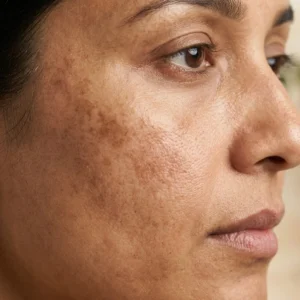
Melasma causes flat brown or grey-brown patches, most often on the cheeks, forehead, nose, upper lip and jawline. It is harmless, but it can be persistent and may return after improvement. A realistic plan combines light protection, gentle treatment and maintenance.

Doctor-led skin, hair, aesthetic and wellness care · Kanakapura Road, Bangalore 560109
Melasma Clinical Assessment & Treatment - Dermis 365 Bengaluru
100% Doctor Supervised
AI Skin & Hair Analysis
3 Laser Platforms
1:1 Customised Care Plans
What is happening in the skin?

Why melasma appears

  1. 1
    Epidermal pigment Often brown with clearer borders and may respond better to treatment.
  2. 2
    Dermal pigment May look grey-brown or bluish and can be slower and harder to improve.
  3. 3
    Mixed pigment Contains both upper and deeper pigment and usually needs long-term combination care.

Clinical Overview & Triggers

  • Clinical view These categories are not always exact. A Wood’s lamp or dermoscopic examination may support assessment, but clinical pattern and response also matter.
Fact check

Common melasma myths

Fact: melasma is benign and does not become cancer, but look-alike conditions should be ruled out.

“Melasma is a type of cancer.”

Fact: melasma is benign and does not become cancer, but look-alike conditions should be ruled out.

“One laser session cures it.”

Fact: procedures can cause rebound pigment and do not replace maintenance.

“Stronger peeling works faster.”

Fact: inflammation from aggressive peels can make melasma darker.

“Only pregnant women get melasma.”

Fact: melasma also occurs in non-pregnant women and men.

Confirm before treating

How melasma is diagnosed

Most cases are diagnosed by examination. A Wood’s lamp, dermoscopy, blood tests or biopsy may be used in selected situations when another condition is suspected.

Symmetry Colour Facial pattern Depth clues Skin tone Pregnancy history Hormonal medicines Sun and heat exposure Previous treatment Skin sensitivity
Available at our clinic

Melasma treatments at Dermis 365

Treatment is personalised for skin tone, pigment depth, triggers, sensitivity, pregnancy status and previous response.

Dermatologist consultation

Confirmation of melasma and review of pattern, triggers, medicines, hormones, products and previous procedures.

Tinted sunscreen plan

Guidance on broad-spectrum and visible-light protection suited to your skin type and daily routine.

Medical skincare

Doctor-selected pigment-regulating, antioxidant and cell-renewal products, introduced with barrier care.

Medical chemical peels

Gentle, supervised peels may support selected epidermal or mixed melasma.

Low-fluence pigment laser

Carefully chosen laser treatment may be considered when appropriate, alongside topical and maintenance care.

Microneedling-assisted care

When melasma overlaps with texture concerns, selected microneedling approaches may be considered cautiously.

Combination treatment

Photoprotection, topical care, peels and selected devices may be sequenced rather than used all at once.

Maintenance programme

A lower-intensity routine helps reduce relapse when active treatment is completed.

Relapse-management plan

If melasma returns, the plan is reviewed for light, heat, hormonal, product and adherence triggers before escalating treatment.

Supplements and procedures should have a clear goal, expected benefit and safety review. Results vary.
When to seek assessment

See a doctor if the patch…

  • Is not symmetrical or typical
  • Is raised or rapidly changing
  • Bleeds or crusts
  • Itches or hurts
  • Has several colours
  • Appeared after a new medicine
  • Persists after pregnancy
  • Worsened after a procedure
Helpful answers

Frequently asked questions Answered Clear & Clear.

Everything you need to know about our doctor-supervised treatments, AI skin analysis, and clinic consultations.

01 What is melasma?

Melasma is a common pigment condition causing flat, often symmetrical brown or grey-brown patches, usually on the face.

02 What causes melasma?

It is influenced by genetic tendency, UV and visible light, heat, hormones, pregnancy, some medicines and skin irritation.

03 Is melasma the same as hyperpigmentation?

Melasma is one type of hyperpigmentation. Post-acne marks and sun spots have different causes and treatment plans.

04 Is melasma cancerous?

No. Melasma is benign and does not turn into cancer, but a dermatologist should confirm that the patch is truly melasma.

05 Why does pregnancy cause melasma?

Hormonal changes during pregnancy can stimulate pigment cells, particularly alongside sun and visible-light exposure.

06 Can men get melasma?

Yes. Melasma is more common in women but also affects men.

07 Does melasma go away permanently?

It may fade, but melasma is often chronic and can return. Long-term protection and maintenance are important.

08 Does sunscreen help melasma?

Yes. Broad-spectrum sunscreen helps prevent worsening. Tinted sunscreen with iron oxides may also protect against visible light.

09 Can heat worsen melasma?

Heat and infrared exposure may aggravate melasma in some people, even without sunburn.

10 Can I treat melasma during pregnancy?

Some treatments are unsuitable during pregnancy or breastfeeding. Use only options approved for your situation.

11 Do chemical peels help melasma?

Carefully selected superficial peels may help suitable patients but can worsen pigment if too strong or irritating.

12 Can laser treatment cure melasma?

Laser may help selected cases but does not guarantee a cure and can cause rebound pigmentation.

13 How long does treatment take?

Improvement often takes several months. Deeper or long-standing pigment may respond more slowly and require maintenance.

14 What treatments are available at Dermis 365?

Care may include personalised skincare, tinted sunscreen guidance, prescription topical treatment, chemical peels and selected laser-based procedures.
5.0 ★★★★★
Google Reviews